
MLBB Gold Lane Guide: When to Farm, Rotate and Join Teamfights

This MLBB Gold Lane guide covers every decision a Marksman player makes: when to keep farming and when to rotate, how to read the minimap to avoid ganks, why the Gold Lane is your team's late-game win condition, and the five mistakes that hold most beginners back.

Weekly Diamond Pass
$1.46
$2-$0.5477 Diamonds
$1.12
$2-$0.88154 Diamonds
$2.24
$4-$1.76231 Diamonds
$3.35
$6-$2.65



Quick answer
Farm first, fight later. In the first 5 minutes, clear every wave and leave lane only for the first Turtle or a turret under threat. From around 7–10 minutes, once you have two core items, join Turtle, Lord and mid-lane fights from behind your frontline.
Before you rotate, check three things: is your wave cleared or pushing out, are you close to finishing an item, and are the numbers in that fight even? If any answer is no, staying in lane is usually the better play.
In Mobile Legends: Bang Bang, the Gold Lane is one of the most important roles for carrying ranked games. If your Gold Lane falls behind, your team often lacks the damage to win mid-game skirmishes and late-game teamfights. When a Gold Lane player farms efficiently, rotates at the right time and reaches core items early, they can take over the match.
The biggest question for every Marksman player is the same: stay in lane and farm, or rotate and join the fight? Rotate too early and you delay your item spikes. Stay too long and your team may lose Turtle, map pressure and momentum. This guide covers how to make that call at every stage, how to read the minimap, and the mistakes that hold most Gold Laners back.
01Why the Gold Lane Is the Most Economy-Focused Role
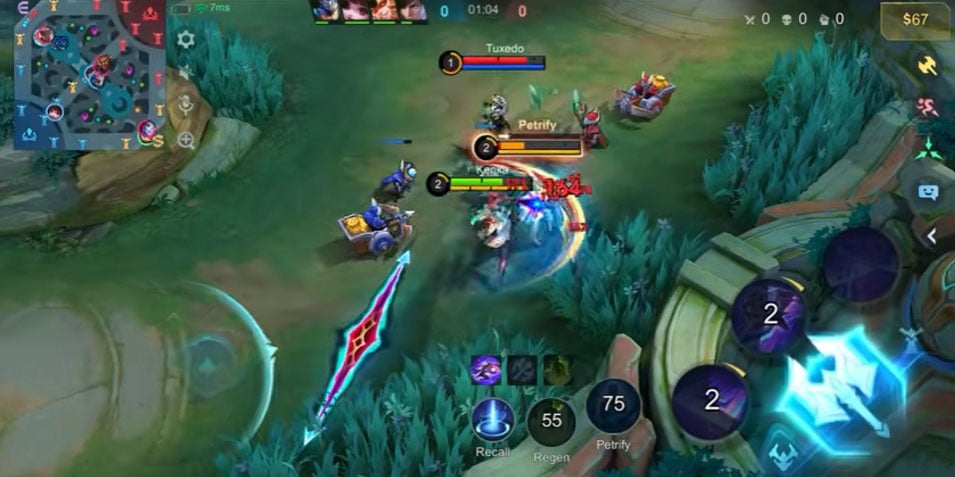
The Gold Lane exists to accelerate gold income. During the early game its minion waves grant extra gold, so scaling heroes, especially Marksmen, reach their power spikes faster than anyone else on the map. Its core jobs are simple:
- Secure consistent minion waves
- Build core items as quickly as possible
- Turn into the team's primary damage dealer
Minion waves are the most reliable gold source in the early game. Kills are situational; farming is consistent. Missing one or two waves can push a key item back by a full minute, which is often the difference in the first big teamfight.
Wave control also shapes the map. When you push your wave first, the enemy Gold Laner has to stay and defend, which gives your team a temporary numbers advantage elsewhere for jungle invades, Turtle and mid-lane pressure. Even when you never leave lane, forcing the enemy to answer your wave already creates value.
02When Gold Lane Players Should Focus on Farming
A strong Gold Laner doesn't rotate just because a fight starts somewhere. The real question is whether that fight is worth more than your next wave, your turret or a nearly finished item. In many games, disciplined farming creates a bigger advantage than low-percentage rotations.
Before your first core item
In the first 0–5 minutes most Marksmen are weak; their power comes from items, not base stats. Focus on clearing waves, keeping lane control, protecting your turret and building small gold leads. If a fight breaks out elsewhere, it's usually better to stay and keep farming. Take early fights only when your jungler is ganking, the enemy is clearly overextended or you have a strong matchup.
When a wave is about to hit your tower
A full wave gives a lot of gold and experience, and missing two can set you back badly. A useful rule: a minion wave is often worth as much gold as a kill. Unless the fight decides a major objective, clear your wave first and rotate second.
When the fight is too far away
If it takes more than about 8–10 seconds to get there, you'll usually arrive too late to matter. Push your lane, pressure the turret and take the extra gold instead. That map trade often helps your team more than a late arrival.
When the enemy jungler is missing
Gold Lane is one of the most-ganked lanes. If the enemy jungler disappears, play closer to your turret, manage the wave carefully and wait for better information. Staying alive keeps your farm lead; see the next section for how to read those warning signs.
03When the Gold Lane Should Join Teamfights
Farming wins the item lead; good rotations turn it into objectives. You shouldn't fight all the time, but you can't stay isolated forever either.
| Situation | What to do |
|---|---|
| First Turtle | Clear your lane, rotate if the path is safe and the fight is still contestable, then deal damage from the backline. |
| Your turret is under threat | Defend it, even slightly behind on items. Losing your first turret early hands the enemy map control, farming space and easy jungle access. |
| Mid-game objectives (7–10 min) | With two core items your damage matters. Join Turtle, Lord and mid-lane skirmishes; this is the shift from pure farming to teamfight impact. |
| Your team lands a good engage | Follow up fast, but don't start fights. Your job is consistent damage from a safe position. |
Teamfight positioning
Marksmen deal huge damage but are fragile. Deal damage from safety: stay behind your frontline, keep distance from enemy divers, reposition constantly and pick off targets one by one. You clean up fights; you don't open them.
04How to Track the Enemy Jungler from Gold Lane
Many Gold Laners think they lose lane to mechanics. More often, they die early to ganks that could have been avoided. Good players rarely know the jungler's exact bush; they know which side of the map is getting dangerous and when a gank window is opening. You're playing for probability, not certainty.
Many Gold Lane ganks are mid-jungle-roam plays. If the enemy mage clears wave and disappears toward your side, back off before the jungler shows.
If your roamer has left your side just as the enemy mid vanishes, that's one of the most common gank timings in the game.
When Turtle is about to spawn, the lower half of the map gets dangerous. Being pushed up right then is an easy setup for the enemy.
If the enemy mid, roamer and jungler all go missing at once, something is about to happen. A quiet minimap is a warning, not a break.
| Game timer | What to read |
|---|---|
| 0–2 min | Where the enemy jungler likely started, and whether their mid and roamer are setting up early pressure on your side. An enemy Marksman suddenly playing brave usually means backup is close. |
| 2–5 min (Turtle phase) | The most dangerous stretch for Gold Lane. Assume your lane can be part of the next Turtle play and don't stand extended when the enemy moves bottom. |
05Why the Gold Lane Is the Late-Game Win Condition
More farm doesn't mean the Gold Lane should dominate early. Most Gold Lane heroes are Marksmen, and Marksmen are extremely item-dependent: low survivability, weak burst and limited mobility early, then high attack speed, crits and penetration once their core items are done.
For most Marksmen the real spike comes at three core items. Until then your goal is to survive, farm and manage your wave. Early fights are the job of the Jungler, who controls tempo, objectives and ganks, and the Roamer, who handles vision, crowd control and protecting carries. Together they absorb early pressure so you can scale.
Higher-ranked teams treat the Gold Lane as a long-term investment: vision, defensive rotations and lane relief go toward the Marksman until they're ready, and then the whole composition plays around protecting the carry. The Gold Lane isn't meant to win the early game; it's meant to win the game.
065 Common Gold Lane Mistakes to Avoid
1. Taking too many early fights
Trading and chasing kills before your first core item usually costs you waves, lane pressure or your life.
2. Ignoring minion waves
Leaving lane for random skirmishes means less gold, slower items and weaker mid-game damage.
3. Pushing without map awareness
Pushing to the enemy turret without vision is how most Gold Laners get collapsed on. Check the minimap and play closer to your turret when enemies are missing.
4. Rotating too early
Unlike Roamers and Junglers, you need steady farm. Rotate once your first turret has fallen, for Turtle, or for a major team objective.
5. Bad teamfight positioning
Standing too far forward makes you easy prey for Assassins and divers. Stay behind your frontline and keep repositioning.
07Best Gold Lane Heroes in the Current MLBB Meta
Hero choice affects how easily you control lane, survive pressure and move into teamfights. The strongest Gold Lane picks either pressure lane well, spike efficiently or stay useful in chaotic mid-game fights.
Weapon flexibility and burst make her one of the most threatening picks.
Better lane pressure and earlier impact without needing a full late-game build.
Scales extremely well and becomes dangerous once his core items are done.
Reliable into dive-heavy teams because she protects her space better than most Marksmen.
For most players, the best approach is to master one safe comfort hero and one stronger scaling option rather than chasing every meta pick. That gives you consistency across drafts.
08Three Key Factors That Help Pro Players Decide
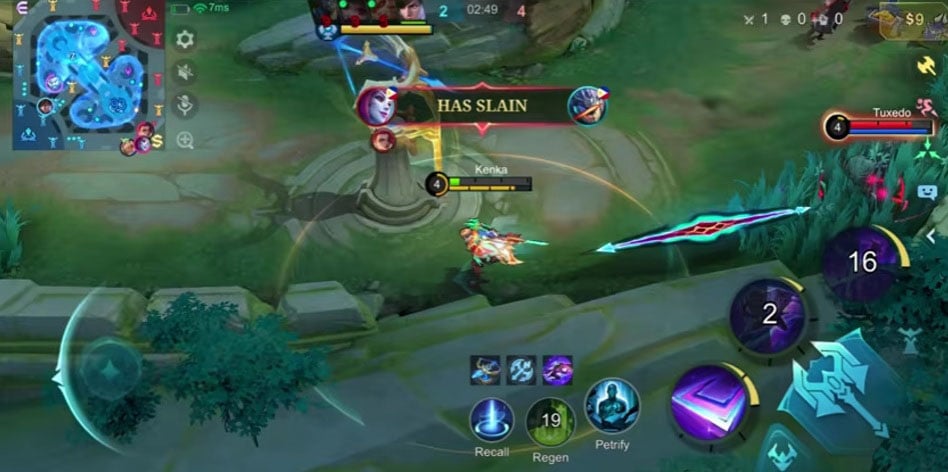
High-rank players don't rotate on instinct. Before leaving lane, they check three things in seconds:
If you're a few minions from a major item, take the wave first. Rotating with incomplete damage turns a strong response into a weak one.
A wave pushing out gives you a safe window to move. A wave about to crash into your tower means leaving costs gold, experience and turret health.
Joining a fight where your team is already outnumbered rarely helps. Pushing another lane to keep your gold lead is often smarter.
09Quick Gold Lane Decision Guide
| Phase | Priority | Join fights when |
|---|---|---|
| Early game 0–5 min | Farm every wave, avoid unnecessary fights, protect your turret | The first Turtle is safe to contest, or your turret is under attack |
| Mid game 5–10 min | Hit your first two core items on time | Turtle fights and key skirmishes once you have one or two core items |
| Late game 10+ min | Stay with your team and position safely | Every objective fight, dealing damage from behind your frontline |
10Unlocking Heroes and Skins Faster
Testing a few Gold Lane heroes is the fastest way to find your comfort pick, but unlocking them takes Diamonds or a lot of grinding. Free MLBB redeem codes help a little. If you'd rather not wait, a Mobile Legends top up on KeyGold delivers Diamonds by UID, usually instantly, keeps the first top-up double bonus and counts toward in-game recharge events.
Diamonds speed up your hero pool, but in actual matches, wave management and farming discipline matter far more than spending.

Final thoughts
Mastering the Gold Lane is about discipline, timing and decisions more than mechanics. Farm first, read the minimap, rotate only when the fight is worth more than your wave, and position safely once you join. Make those habits consistent and you'll hit your power spikes faster and become a far more reliable carry.
Building your Gold Lane hero pool?
Top up MLBB Diamonds by UID, usually delivered instantly, with your first top-up double bonus kept.
Top up Mobile Legends